Tuesday, December 21, 2021

How To Find Vulnerable Ports

Aport scanis a method for determining which ports on a network are open. As ports on a computer are the place where information is sent and received, port scanning is analogous to knocking on doors to see if someone is home. Running a port scan on a network or server reveals which ports are open and listening , as well as revealing the presence of security devices such as firewalls that are present between the sender and the target.

how to find vulnerable ports - Aport scanis a method for determining which ports on a network are open

It is also valuable for testing network security and the strength of the system's firewall. Due to this functionality, it is also a popular reconnaissance tool for attackers seeking a weak point of access to break into a computer. Scanning tools used by both attackers and security professionals allow an automated detection of open ports. Many network-based IDS/IPS solutions, and even workstation-based endpoint security solutions can detect port scanning.

how to find vulnerable ports - As ports on a computer are the place where information is sent and received

It is worthwhile to investigate port scanning originating from inside the local network, as it often means a compromised device. However, computers running some security solutions can generate false positives. This is beacause vendors of security solutions feature a port scanner to detect vulnerable devices inside a home network. Proactive scanning provides the opportunity to find and fix vulnerabilities before attackers do. Equally important is closing and blocking unnecessarily available ports to prevent exploitation by vulnerabilities you don't yet know about. Proactive scanning also makes you better aware of what information attackers can obtain.

how to find vulnerable ports - Running a port scan on a network or server reveals which ports are open and listening

When you have reviewed the results yourself for weaknesses and are comfortable with your security posture, port scanners become much less threatening. The people who are most paranoid about port scanners and employ the most defensive and detection software are often those who have the least confidence in their network security. I do not want to dissuade anyone from using the techniques described throughout this chapter, but only to suggest that they first seek out and fix any existing network risks and vulnerabilities. That approach is also less stressful than constantly worrying that attackers may find the vulnerabilities.

how to find vulnerable ports - It is also valuable for testing network security and the strength of the systems firewall

Network based vulnerability scanners identify possible network security attacks and vulnerable systems on wired or wireless networks. A port scan is a series of messages sent by someone to learn which computer network services a given computer provides. Port scanners are applications that identify which ports and services are open or closed on an internet-connected device. A port scanner can send a connection request to the target computer on all 65,536 ports and record which ports respond and how.

how to find vulnerable ports - Due to this functionality

The types of responses received from the ports indicate whether they are in use or not. Once proactive scanning is in place, the first step is to fix any known vulnerabilities. Next comes audit every open port available externally through the firewall or on the internal network. Services which the public doesn't need to reach should be blocked at the firewall.

how to find vulnerable ports - Scanning tools used by both attackers and security professionals allow an automated detection of open ports

If employees need to reach them, perhaps they can use the VPN instead. Internal services are often listening even when they aren't being used. They might have been installed or enabled by default, or were enabled due to past use and never disabled. Even if you don't know of a vulnerability in the service, attackers might. Security bugs might be found for the service in the future too. These cybercriminals often use port scanning as a preliminary step when targeting networks.

how to find vulnerable ports - Many network-based IDSIPS solutions

They use the port scan to scope out the security levels of various organizations and determine who has a strong firewall and who may have a vulnerable server or network. A number of TCP protocol techniques actually make it possible for attackers to conceal their network location and use "decoy traffic" to perform port scans without revealing any network address to the target. A port scanner is an application designed to probe a server or host for open ports.

how to find vulnerable ports - It is worthwhile to investigate port scanning originating from inside the local network

Such an application may be used by administrators to verify security policies of their networks and by attackers to identify network services running on a host and exploit vulnerabilities. The scanner then terminates the session without establishing a connection. If the port is closed, it responds with an RST packet, indicating that it cannot be accessed. If the port is located behind a firewall, the request does not generate a response at all. This is the most common scanning method because it does not require an established connection and is not logged by most simple event-tracking tools.

how to find vulnerable ports - However

On the other hand, SYN scanning requires superuser privileges on the device that sends the requests and which might not belong to the attacker. Open ports - This server is actively accepting TCP connections, UDP datagrams or SCTP associations on this port. Security-minded people know that each open port is an avenue for attack. Attackers and pen-testers want to exploit the open ports, while administrators try to close or protect them with firewalls without thwarting legitimate users. Open ports are also interesting for non-security scans because they show services available for use on the network. Before purchasing a vulnerability scanning tool, it's important to understand exactly how scanning will contribute to your more broad vulnerability management and security posture strategy.

what ports are vulnerable

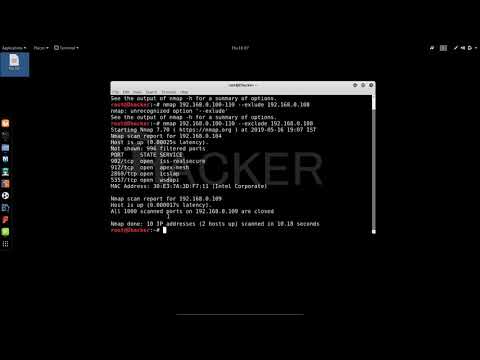
Traditional vulnerability scanning tools can play an important role in catching common CVEs if the scans are conducted frequently. Nmap is a utility for network exploration or security auditing. It supports ping scanning , many port scanning techniques, version detection , and TCP/IP fingerprinting .

how to find vulnerable ports - Proactive scanning provides the opportunity to find and fix vulnerabilities before attackers do

Nmap also offers flexible target and port specification, decoy/stealth scanning, sunRPC scanning, and more. Most Unix and Windows platforms are supported in both GUI and commandline modes. Several popular handheld devices are also supported, including the Sharp Zaurus and the iPAQ. Many Internet service providers restrict their customers' ability to perform port scans to destinations outside of their home networks. This is usually covered in the terms of service or acceptable use policy to which the customer must agree.

how to find vulnerable ports - Equally important is closing and blocking unnecessarily available ports to prevent exploitation by vulnerabilities you don

Some ISPs implement packet filters or transparent proxies that prevent outgoing service requests to certain ports. For example, if an ISP provides a transparent HTTP proxy on port 80, port scans of any address will appear to have port 80 open, regardless of the target host's actual configuration. All forms of port scanning rely on the assumption that the targeted host is compliant with RFC Transmission Control Protocol. Although this is the case most of the time, there is still a chance a host might send back strange packets or even generate false positives when the TCP/IP stack of the host is non-RFC-compliant or has been altered.

how to find vulnerable ports - Proactive scanning also makes you better aware of what information attackers can obtain

This is especially true for less common scan techniques that are OS-dependent . The TCP/IP stack fingerprinting method also relies on these types of different network responses from a specific stimulus to guess the type of the operating system the host is running. The main drawback for deploying active exploit filters is the blocking of scanning by Whitehat organizations.
how to find vulnerable ports - When you have reviewed the results yourself for weaknesses and are comfortable with your security posture

There are groups who will scan for vulnerable systems and provide you reports. Blocking an active exploit port will also block the whitehat scanning. In that case, it might be worth considering setting up a "vulnerable port scanning system" in your network to find customers which might be a vulnerability.

how to find vulnerable ports - The people who are most paranoid about port scanners and employ the most defensive and detection software are often those who have the least confidence in their network security

As port scanning is an older technique, it requires security changes and up-to-date threat intelligence because protocols and security tools are evolving daily. Host-based vulnerability assessment tools can also provide an insight into the potential damage that can be done by insiders and outsiders once some level of access is granted or taken on a system. This is done by sending predetermined traffic to the target and based on a response or lack of a response, the port scanner in use makes its own conclusions with regards to the functionality of the port being scanned.

how to find vulnerable ports - I do not want to dissuade anyone from using the techniques described throughout this chapter

It is impossible to prevent the act of port scanning; anyone can select an IP address and scan it for open ports. To properly protect an enterprise network, security teams should find out what attackers would discover during a port scan of their network by running their own scan. Be aware, however, that security assessments and pen tests against many cloud hosting services, such as AWS, need approval prior to scanning.

how to find vulnerable ports - That approach is also less stressful than constantly worrying that attackers may find the vulnerabilities

Port scanning is one of the most popular information-gathering methods used by malicious actors. Part of the reconnaissance process, an attacker can use the data collected by a port scan to find out what services a device is running and to get an idea of the OS being used. This data can then be used to flag vulnerable systems with the intention of exploiting them to gain access to the network. Also known as filtered or dropped, this involves neither acknowledging the request nor sending a reply.

how to find vulnerable ports - Network based vulnerability scanners identify possible network security attacks and vulnerable systems on wired or wireless networks

No response indicates to the port scanner that a firewall likely filtered the request packet, that the port is blocked or that there is no port there. For example, if a port is blocked or in stealth mode, a firewall will not respond to the port scanner. Interestingly, blocked ports violate TCP/IP rules of conduct, and therefore, a firewall has to suppress the computer's closed port replies. Security teams may even find that the corporate firewall has not blocked all the network ports. For example, if port 113, used by Identification Protocol, is completely blocked, connections to some remote internet servers, such as Internet Relay Chat, may be delayed or denied altogether. For this reason, many firewall rules set port 113 to closed instead of blocking it completely.

how to find vulnerable ports - A port scan is a series of messages sent by someone to learn which computer network services a given computer provides

In fact, the host discovery element in network scanning is often the first step used by attackers before they execute an attack. The goal behind port and network scanning is to identify the organization of IP addresses, hosts, and ports to properly determine open or vulnerable server locations and diagnose security levels. Both network and port scanning can reveal the presence of security measures in place such as a firewall between the server and the user's device. One of the easiest ways for cybercriminals to gain access to an organization's devices is through open ports. System administrators and security professionals run port scans as part of vulnerability scans to identify such open ports and avoid any kind of intrusion.

how to find vulnerable ports - Port scanners are applications that identify which ports and services are open or closed on an internet-connected device

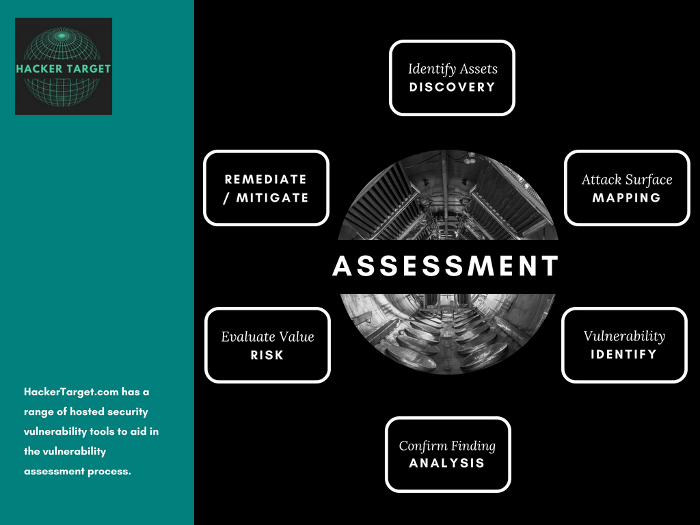
In this blog, we'll take a deep dive into the various aspects of port scanning and the role it plays in vulnerability scanning. The objective of this step is to draft a comprehensive list of an application's vulnerabilities. Security analysts test the security health of applications, servers or other systems by scanning them with automated tools, or testing and evaluating them manually. Analysts also rely on vulnerability databases, vendor vulnerability announcements, asset management systems and threat intelligence feeds to identify security weaknesses.

how to find vulnerable ports - A port scanner can send a connection request to the target computer on all 65

The same task may be performed by vulnerability scanners, but first check that the scanner of choice is able to identify HTTP services running on non-standard ports. As hinted before, Nessus is also able to spot popular applications or web interfaces which could otherwise go unnoticed . While scanning tools like vulnerability assessment and network scanners provide valuable insight into a wide array of devices, there are limitations when relying on them for cybersecurity asset management alone.

how to find vulnerable ports - The types of responses received from the ports indicate whether they are in use or not

When the target asset is on a local system segment , the scan occurs more rapidly because the asset will respond that ports are closed. The difficulty occurs when the device is behind a firewall, which consumes packets so that they do not return to the Scan Engine. In this case the application will wait the maximum time between port scans.

how to find vulnerable ports - Once proactive scanning is in place

TCP port scanning can exceed five hours, especially if it includes full-port scans of 65K ports. To reduce scan time, do not run full UDP port scans unless it is necessary. UDP port scanning generally takes longer than TCP port scanning because UDP is a "connectionless" protocol. In a UDP scan, the application interprets non-response from the asset as an indication that a port is open or filtered, which slows the process.

how to find vulnerable ports - Next comes audit every open port available externally through the firewall or on the internal network

When configured to perform UDP scanning, the application matches the packet exchange pace of the target asset. Oracle Solaris only responds to 2 UDP packet failures per second as a rate limiting feature, so this scanning in this environment can be very slow in some cases. Ephemeral ports are temporary assignments which are allocated for the source ports of protocol process. At times, applications which consistently allocate to ephemeral ports are targeted.
how to find vulnerable ports - Services which the public doesn

For example, UDP port 1900 for SSDP has been targeting in the past. Some Operators have deployed UDP port 1900 to their exploited port filtering rules with no customer complaint increase. The key is for exploited port filtering to be deployed and not be blocked by "perceived risk" to customer impact.
how to find vulnerable ports - If employees need to reach them

All these scans, probes, and attack pose a risk to the Operator. Infected customers cause unnecessary damage, generates calls to the Operator's help desk, pose a risk to the Operator's other customers, and increase the chance of damage to the Operator's core infrastructure. The Operator will always be exploring options to reduce the business risk to their infrastructure and their customers.

how to find vulnerable ports - Internal services are often listening even when they aren

This is why the risk reductions gained by the anti-spoof/source address validation filters AND anti-exploit port filters are critical to the Operator's business. Deploying Exploitable Port filters on the customer edge minimizing the risk to and from the customers . Applying these same filters to the Operator's network (protecting the Operator's staff and infrastructure) adds additional risk reduction. Finally, monitoring the volume of exploitable port traffic on the peering edge keeps a temperature to the Threat Actor's interest in the ports.

how to find vulnerable ports - They might have been installed or enabled by default

Normal, benign system and network events from legitimate remote service scanning may be uncommon, depending on the environment and how they are used. Legitimate open port and vulnerability scanning may be conducted within the environment and will need to be deconflicted with any detection capabilities developed. Network intrusion detection systems can also be used to identify scanning activity. Monitor for process use of the networks and inspect intra-network flows to detect port scans.

how to find vulnerable ports - Even if you don

Adversaries may attempt to get a listing of services running on remote hosts, including those that may be vulnerable to remote software exploitation. Methods to acquire this information include port scans and vulnerability scans using tools that are brought onto a system. Most security appliances can link ongoing repeated scan attempts from the same source whether they target a single host or multiple hosts. To be effective, port scan attacks may need to probe many different ports on many different systems over a relatively short time period, which makes the attempts easier to detect. To counter this, some attackers may find it preferable to probe for open ports over a much longer time frame, in which case it becomes more difficult to detect a port scan attack. The downside for the attacker, however, is that it may take hours, days or longer to find a vulnerable system.

how to find vulnerable ports - Security bugs might be found for the service in the future too

Tuesday, October 12, 2021

Voltage Divider Calculator With Load

In electronics or EET, a voltage divider is a linear circuit that produces an output voltage that is a fraction of its input voltage. Voltage division refers to the partitioning of a voltage among the components of the divider. An example of a voltage divider consists of two resistors in series or a potentiometer. It is commonly used to create a reference voltage, or to get a low voltage signal proportional to the voltage to be measured, and may also be used as a signal attenuator at low frequencies. In electric power transmission, a capacitive voltage divider is used for measurement of high voltage.

voltage divider calculator with load - In electronics or EET

This physics video tutorial provides a basic introduction into voltage divider circuits. It provides a simple formula to calculate the voltage across a resistor in a series circuit with two resistors in series with a battery. It discusses the effect on the output voltage of a voltage divider circuit when a load resistor is placed in parallel with R2. It discusses how to design a voltage divider circuit to meet certain requirements.

voltage divider calculator with load - Voltage division refers to the partitioning of a voltage among the components of the divider

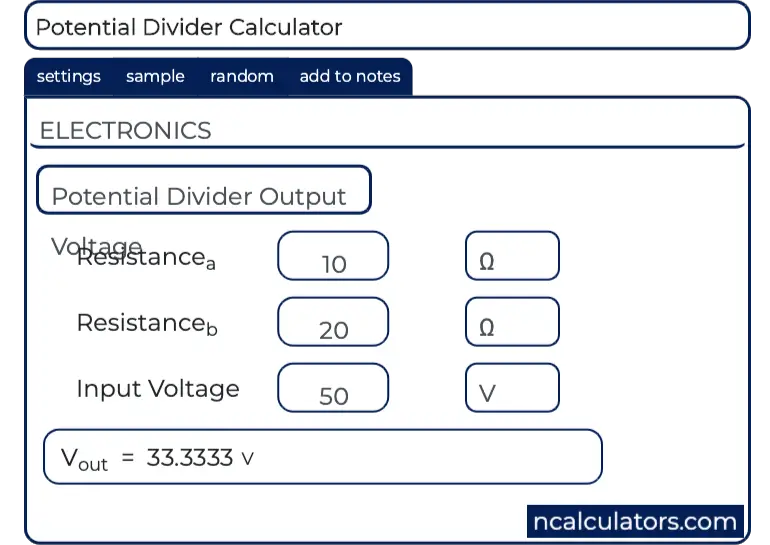
The two resistor voltage divider is one of the most common and useful circuits used by engineers. The primary purpose of this circuit is to scale down the input voltage to a lower value based on the ratio of the two resistors. This calculator helps determine the output voltage of the divider circuit given the input voltage and the resistor values. Take note that the output voltage in actual circuits might be different, since resistor tolerance and load resistance become factors.

voltage divider calculator with load - An example of a voltage divider consists of two resistors in series or a potentiometer

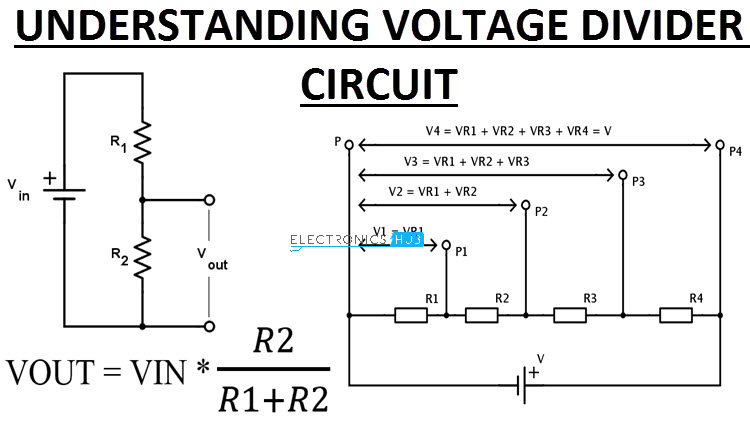
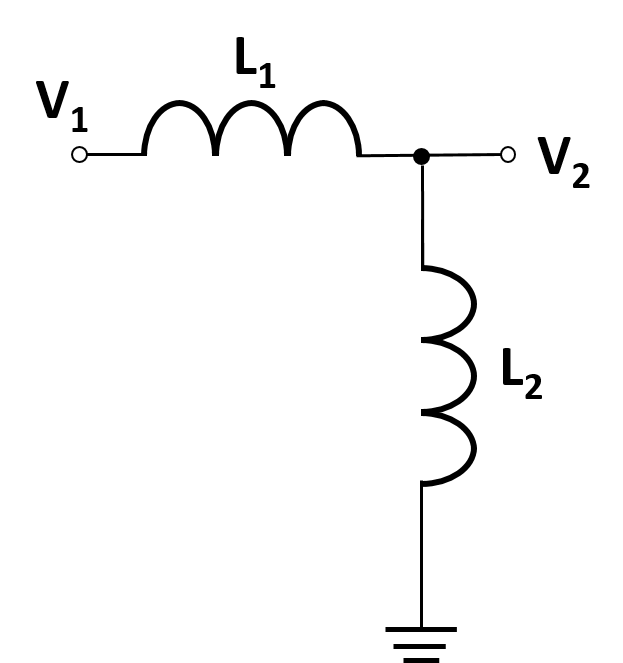
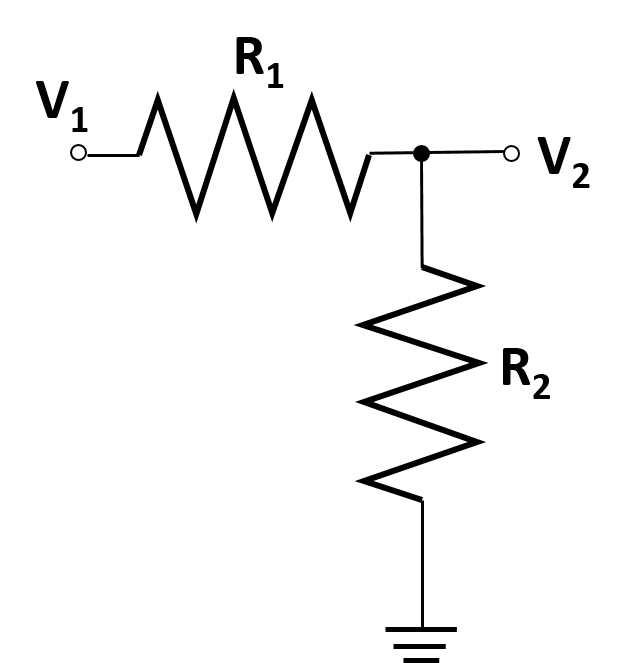
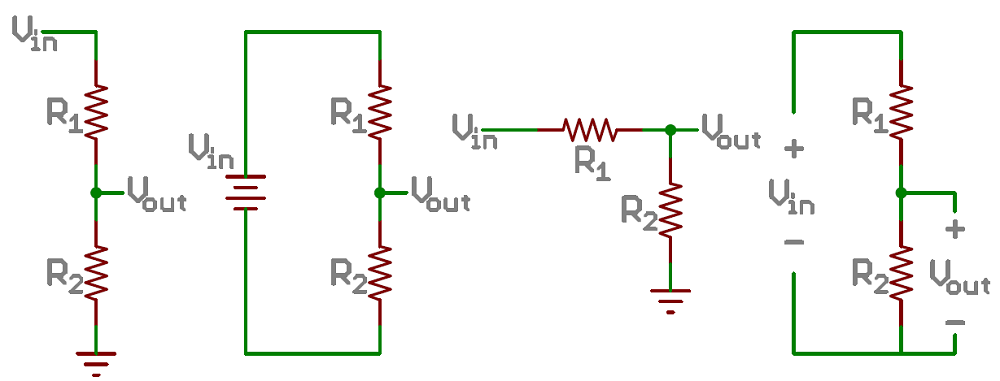
As you can see the voltage divider circuit consists of two resistors connected in series with a voltage tap between them. Use this tool to calculate the output voltage of a resistor divider circuit for a given set of resistor values and source voltage. A voltage divider is a passive linear circuit that produces an output voltage that is a fraction of its input voltage .

voltage divider calculator with load - It is commonly used to create a reference voltage

A voltage divider is a simple circuit which turns a large voltage into a smaller one. Using just two series resistors and an input voltage, we can create an output voltage that is a fraction of the input. Voltage dividers are one of the most fundamental circuits in electronics.

voltage divider calculator with load - In electric power transmission

If learning Ohm's law was like being introduced to the ABC's, learning about voltage dividers would be like learning how to spell cat. A Voltage divider calculator calculates the voltage drops on each resistor load, when connected in series. Enter the total voltage supply, Resistance of first load, second load and third load and click calculate. Make use of the below simple voltage drop across resistor calculator to get the voltage drop values. Voltage dividers can be used to allow a microcontroller to measure the resistance of a sensor. The sensor is wired in series with a known resistance to form a voltage divider and a known voltage is applied across the divider.

voltage divider calculator with load - This physics video tutorial provides a basic introduction into voltage divider circuits

An example that is commonly used involves a potentiometer as one of the resistive elements. When the shaft of the potentiometer is rotated the resistance it produces either increases or decreases, the change in resistance corresponds to the angular change of the shaft. If coupled with a stable voltage reference, the output voltage can be fed into an analog-to-digital converter and a display can show the angle. In electronics, a voltage divider is a passive linear circuit that produces an output voltage that is a fraction of its input voltage .

voltage divider calculator with load - It provides a simple formula to calculate the voltage across a resistor in a series circuit with two resistors in series with a battery

Voltage division is the result of distributing the input voltage among the components of the divider. A simple example of a voltage divider is two resistors connected in series, with the input voltage applied across the resistor pair and the output voltage emerging from the connection between them. The capacitor in this voltage divider circuit produces a voltage drop. This is usually used to reduce the extremely high voltage to provide a low output voltage signal. Currently, this divider is applicable in touch screen tablets, mobiles, and display devices. Passive voltage is the basic type of divider circuit that can be made with the help of two resistors connected in series.

voltage divider calculator with load - It discusses the effect on the output voltage of a voltage divider circuit when a load resistor is placed in parallel with R2

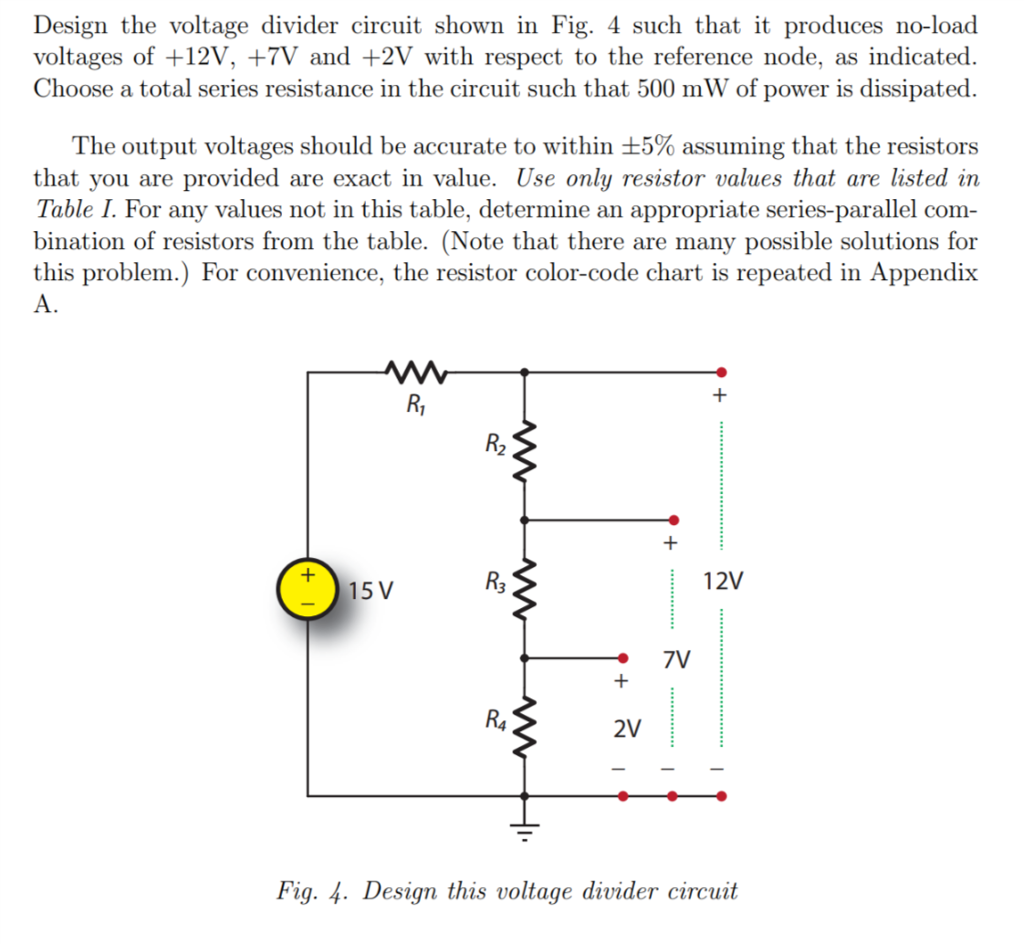
This circuit uses the law of the Voltage divider to measure the voltage drop across each series resistor. Voltage dividers are very common and used very often in circuits. Many times in circuits, different levels of voltage must be allocated to different parts of a circuit. To do this, a voltage divider circuit, such as that shown above, can be used. This can divide the input voltage that a circuit receives and allocate it accordingly and as needed to different parts of the circuit. However, one chip in the circuit may need 7 volts, while another chip in the circuit only needs 3 volts.

voltage divider calculator with load - It discusses how to design a voltage divider circuit to meet certain requirements

We can allocate these voltages to the different chips by a voltage divider. If we make one resistor have a value of 3KΩ and the other resistor have a value of 7KΩ, this will allocate the 10 volts into 3V and 7V. A voltage divider circuit is very simple circuit consisting of only two resistors as shown above. The required output voltage can be obtained across the resistor R2.

voltage divider calculator with load - The two resistor voltage divider is one of the most common and useful circuits used by engineers

Using these two resistors we can convert an input voltage to any required output voltage, this output voltage is decided by the value of the resistance R1 and R2. A problem seen at high frequencies is that stray capacitance effects with the overall response of a resistive voltage divider. The simplest way to correct for this problem is to introduce capacitors in parallel to the resistors. Capacitor C2 which is across the output, V2, can be thought of as any stray parasitic capacitance at the output of the divider that might be part of the system.

voltage divider calculator with load - The primary purpose of this circuit is to scale down the input voltage to a lower value based on the ratio of the two resistors

We can see that this circuit, known as a frequency compensated divider, works like a resistive voltage divider at DC or low frequencies and like a capacitive voltage divider at high frequencies. Voltage dividers can be constructed from reactive components just as they can be constructed from resistors. Also as with resistor dividers, the divider ratio of a capacitive voltage divider is not affected by changes in the signal frequency even though the capacitor reactance is frequency dependent. A voltage divider can be used as a crude logic level shifter to interface two circuits that use different operating voltages. For example, some logic circuits operate at 5V whereas others operate at 3.3V.

voltage divider calculator with load - This calculator helps determine the output voltage of the divider circuit given the input voltage and the resistor values

Directly interfacing a 5V logic output to a 3.3V input may cause permanent damage to the 3.3V circuit. In this case, a voltage divider with an output ratio of 3.3/5 might be used to reduce the 5V signal to 3.3V, to allow the circuits to interoperate without damaging the 3.3V circuit. For this to be feasible, the 5V source impedance and 3.3V input impedance must be negligible, or they must be constant and the divider resistor values must account for their impedances.

voltage divider calculator with load - Take note that the output voltage in actual circuits might be different

If the input impedance is capacitive, a purely resistive divider will limit the data rate. This can be roughly overcome by adding a capacitor in series with the top resistor, to make both legs of the divider capacitive as well as resistive. The two resistor voltage divider is used often to supply a voltage different from that of an available battery or power supply. In application the output voltage depends upon the resistance of the load it drives. Where is the parallel resistance of R 2 and the load resistor R L. A potential divider circuit is a very common circuit used in electronics where an input voltage has to be converted to another voltage less than it.

voltage divider calculator with load - As you can see the voltage divider circuit consists of two resistors connected in series with a voltage tap between them

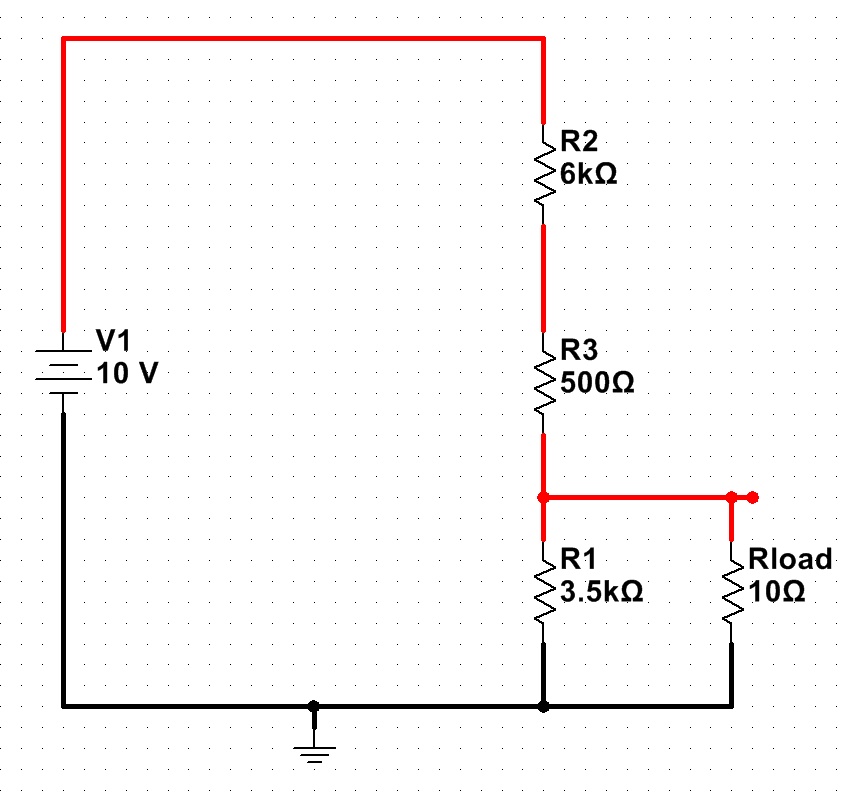
This circuit is very useful for all analog circuits where variable voltages are required, hence it is important to understand how this circuit works and how to calculate the values of Resistors. Potential divider or voltage divider circuit with external load resistor on the output The new overall resistance of the bottom resistor in the voltage divider is R2 in parallel with R3. If we call this resistor Rt, then this is easy to calculate from the fact that it is two resistors in parallel. The 4.76V is a 4.8% difference from our expected 5V output. You will need to consider if this change is critical to the circuit you are designing.

voltage divider calculator with load - Use this tool to calculate the output voltage of a resistor divider circuit for a given set of resistor values and source voltage

When using a higher load the divider will be more accurate and a lower load will result in an even less accurate output voltage than the one in our example. This is one of the reasons why voltage dividers should not be used for supplying power in place of components such as voltage regulators or other power supply circuits. A unity gain op amp can be used following the voltage divider in circuits that require a more precise output voltage.

voltage divider calculator with load - A voltage divider is a passive linear circuit that produces an output voltage that is a fraction of its input voltage

The resistors in the circuit are connected in series while the voltage source is connected in this resistor. The input voltage can be transmitted between two resistors in the circuit so that the voltage is split. The Voltage Divider rule is the simplest and most important electronic circuit in any electronic circuit.

voltage divider calculator with load - A voltage divider is a simple circuit which turns a large voltage into a smaller one

This circuit is used to convert large voltages to small voltages. In this circuit, we can measure the output voltage using only one input voltage and two series resistors. Thus the output voltage is a fraction of the input voltage.

voltage divider calculator with load - Using just two series resistors and an input voltage

The best example of a Voltage divider is that two resistors are connected in series. This voltage divider calculator can be used to calculate the resistive voltage drop across two, three, four or five resistors in series. The user can select the input voltage, number of resistors and the units for the resistors. A voltage divider circuit is a basic circuit that uses a pair of resistors to convert a higher voltage to a lower voltage. With 2 resistors R1 and R2, you may determine the voltage drop using our online voltage divider calculator. To use this voltage divider resistor calculator, a user must enter the value of the input voltage, VIN, the value of resistor R1, and the output voltage, VOUT, and click the 'Calculate' button.

voltage divider calculator with load - Voltage dividers are one of the most fundamental circuits in electronics

The voltage output result will then be calculated and automatically displayed. The result of this output voltage is calculated in unit volts . A voltage divider can be used to scale down a very high voltage so that it can be measured by a volt meter. The high voltage is applied across the divider, and the divider output—which outputs a lower voltage that is within the meter's input range—is measured by the meter. High voltage resistor divider probes designed specifically for this purpose can be used to measure voltages up to 100 kV.

voltage divider calculator with load - If learning Ohm

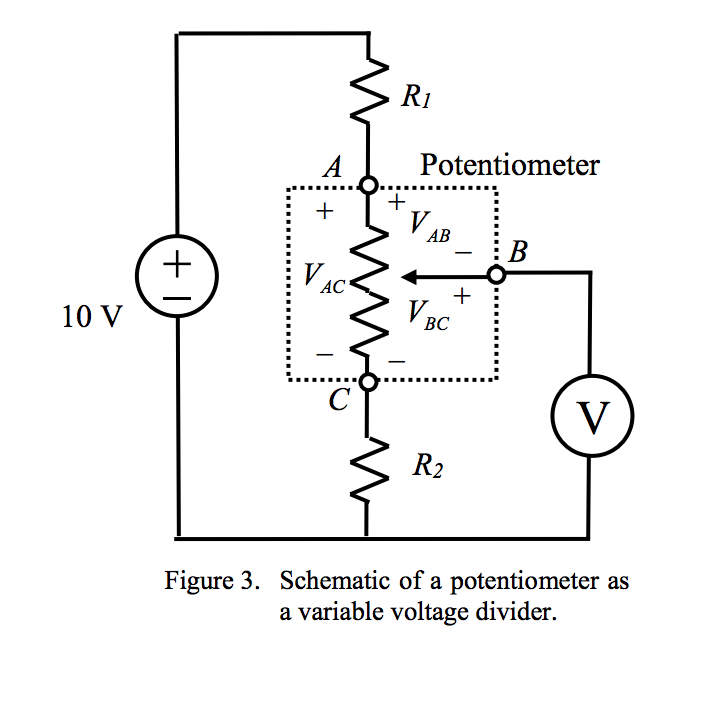
Capacitive divider probes are typically used for voltages above 100 kV, as the heat caused by power losses in resistor divider probes at such high voltages could be excessive. Potentiometer is a three-terminal resistor with a sliding contact that forms an adjustable voltage divider. The potentiometer can be used as a voltage divider to obtain a manually adjustable output voltage at the slider from a fixed input voltage applied across the two ends of the potentiometer. The voltage across Ro can be calculated by the resistances and the sourse voltage. This will create a voltage drop around the coil in the voltage divider. It consists of a coil or a single winding that receives the output voltage from any of the parts.

voltage divider calculator with load - A Voltage divider calculator calculates the voltage drops on each resistor load

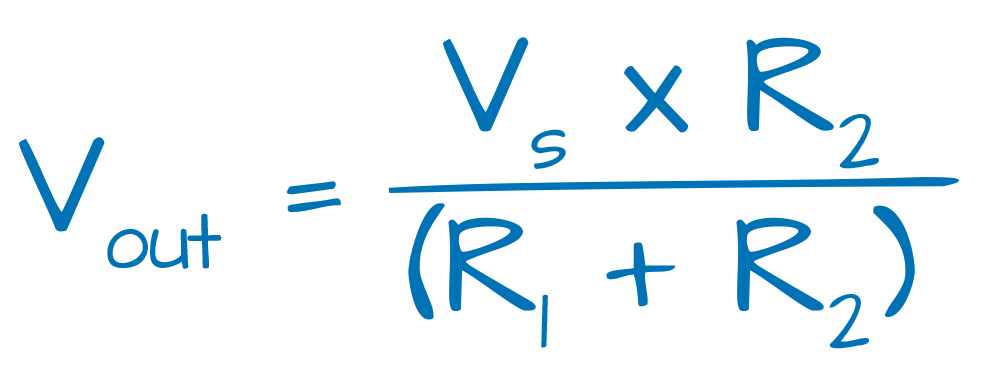
When you know the three values ​​of the circuit above, the voltage divider that accepts the equation is the input voltage and two resistor values. Using the equation given below, we can find the output voltage. When the input voltage is applied to a pair of resistors, the output voltage will appear in the connection between them. This divider is usually used to reduce the intensity of the voltage or create a reference voltage and is used as a signal attenuator at low frequencies.

voltage divider calculator with load - Enter the total voltage supply

Voltage dividers may be suitable for low frequencies in DC and proportions. A voltage divider circuit is a very common circuit that takes a higher voltage and converts it to a lower one by using a pair of resistors. The formula for calculating the output voltage is based on Ohms Law and is shown below. An online calculator to calculate the output voltage, current and power of a load in dc voltage divider is presented.

voltage divider calculator with load - Make use of the below simple voltage drop across resistor calculator to get the voltage drop values

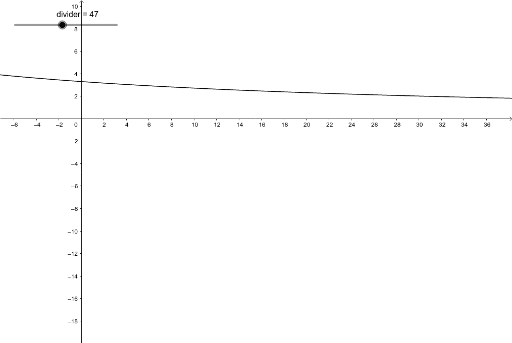
Activities using the calculator to investigate the maximum power delivered to the load. Activities using the calculator to investigate the maximum power delivered to the load \( R_L \) are suggestsed. The voltage divider is a series circuit made up of two resistors that divide an electrical voltage. When the voltage divider is loaded, a further resistor is connected in parallel to the second resistor. The ratio of the partial voltages corresponds to the ratio of the resistors R1 and the resistance of the parallel connection of .

voltage divider calculator with load - Voltage dividers can be used to allow a microcontroller to measure the resistance of a sensor

Adding a load resistor will effectively add a known fixed load in addition to the potentially-variable one. Suppose one had a 12-volt source and the intended load were 10uA +/- 5uA at 6 volts. If one just used a series resistor sized for the 10uA case , it would drop only 3V at 5uA and 9V at 15uA .

voltage divider calculator with load - The sensor is wired in series with a known resistance to form a voltage divider and a known voltage is applied across the divider

The voltage supply is applied to this circuit using a voltage source. In this circuit, we can measure the voltage drop across the resistor by applying the law of KVL and ohm. Can therefore be given as the flow of current in the circuit. The law of voltage divider is used to solve the circuit to simplify the solution. Even simple circuits can be completely solved by using this rule.

voltage divider calculator with load - An example that is commonly used involves a potentiometer as one of the resistive elements

The main concept of this law is that the voltage is divided between the resistors that are connected in series in direct proportion to their resistance. The two important parts involved in a Waltge divider are the circuit and the equation. If the voltage divider operates near its extremes, with the output voltage close to either $v_$ or $0$, the percentage error will be different. To find out how much different, we repeat the analysis with the output voltage set to $90\%$ and $10\%$ of the divider range. We keep the load resistor ten times the bottom resistor, so the parallel combination of $\text R2$ and $\text R_$ is still $0.91\,\text R2$. Then connect a wire from the top of the load resistor to the center node of the voltage divider.

voltage divider calculator with load - When the shaft of the potentiometer is rotated the resistance it produces either increases or decreases

The interactive animation below shows a voltage divider which can be connected to a load resistance RL via the button with the red cross. Set different values for the various resistances and observe the resulting effects on voltage and current in the loaded and unloaded states. Note especially how sharply the load voltage UL drops in the loaded state compared with the unloaded state.

voltage divider calculator with load - If coupled with a stable voltage reference

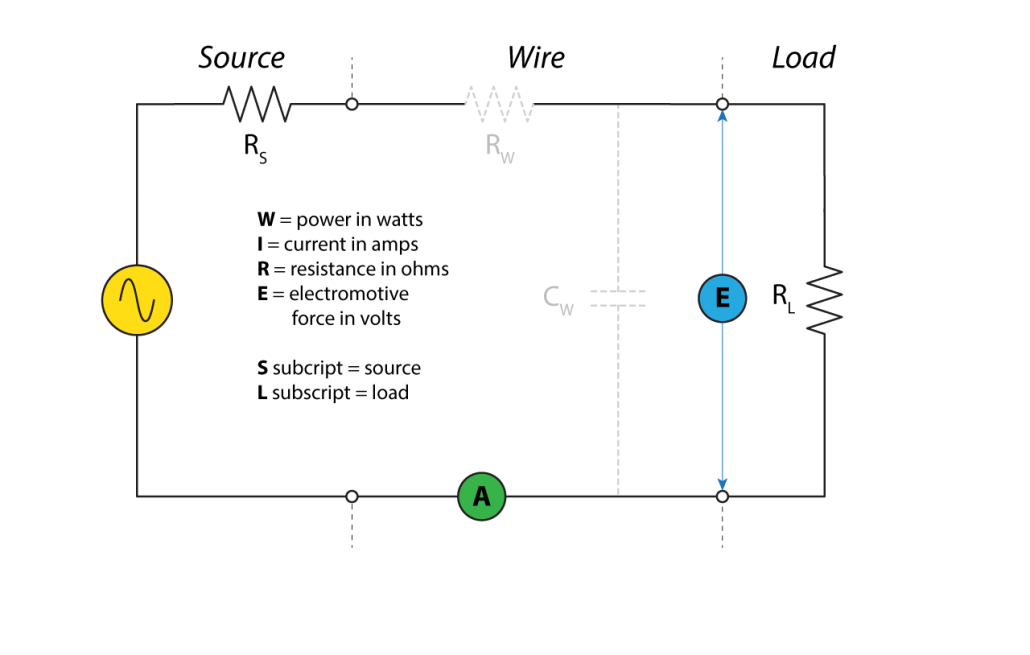
The voltage divider can be loaded by connecting it to a load . This load resistance conducts a load current IL, while resistor R2 conducts a parallel current IQ. Voltage and current division is an application of Kirchhoffs Laws. In electronics or EET, a voltage divider is a linear circuit that produces an output voltage that is a fraction of its input voltage .

voltage divider calculator with load - In electronics

The voltage and currents in the unloaded voltage divider change. To build a practical voltage divider the load requirements must be known. There is some wasted energy or bleeder current in any voltage divider circuit.

voltage divider calculator with load - Voltage division is the result of distributing the input voltage among the components of the divider

C# Load Embedded Html Document And Show In Browser

On the server-side, solely the byte offset at which the preview picture ends needs to be decided and saved. In a CMS system, it ought to be ...